Billionaires Are Moving to Florida, and It Is Reshaping the Map of American Wealth
Florida has always had money. But what is happening lately feels different. This is not just wealthy retirees heading south for sunshine. It is founders, hedge fund leaders, and tech power players buying nine-figure homes, shifting residency, and clustering in specific pockets that offer privacy, prestige, and a very favorable tax structure.
If you have been hearing whispers about Florida becoming a serious tech and capital magnet, you are not imagining it. The migration is real. The zip codes are consistent. And the reason why is surprisingly straightforward.
Below, we've created a practical breakdown of why this is likely happening, where these billionaires are going, and why South Florida keeps coming up as a potential Silicon Valley alternative.
Why Are Billionaires Moving to Florida?
Let's ask the question directly, because it is the one that matters most.
Why is this happening now?
It comes down to money strategy, lifestyle appeal, and momentum.
1. Taxes are a major driver
Florida has no state income tax. That alone is a massive lever when you are dealing with founder equity, large liquidity events, and investment income. Compare that to states like California or New York, where state taxes can significantly impact high earners. When you are worth billions, small percentage differences translate into enormous dollar amounts. For many, the financial math is pretty impossible to ignore.
2. Geographic strategy matters more than ever
For some billionaires, Florida is not just a tax address. It is strategic geography. Miami provides proximity to Latin America and international capital. Palm Beach County has long been the mecca for finance and legacy-level wealth. The Space Coast continues to attract aerospace and innovation-driven industries. Being located where capital and influence are moving has long-term strategic value.
3. Privacy and security are built into the right neighborhoods
Many of the Florida communities attracting ultra-wealthy buyers are designed for discretion. If you live in or have ever had the opportunity to visit some of the more glamorous locations of South Florida, you're probably privy to gated islands, controlled access bridges, private security detail and extremely limited inventory. For public figures and global executives, that kind of built-in protection is not just a luxury. It is practical.
4. Momentum is Compounding in Clusters
Once a few high-profile names commit, others pay attention. Wealth clusters. Influence clusters. Talent clusters. That is how the Florida real estate markets shift from primetime vacation spots to near-exclusive power centers.
Where Billionaires Are Moving in Florida
Certain locations keep showing up in reports and high-end transaction data. These are not random moves. They are strategic.
Indian Creek Island in Miami-Dade County
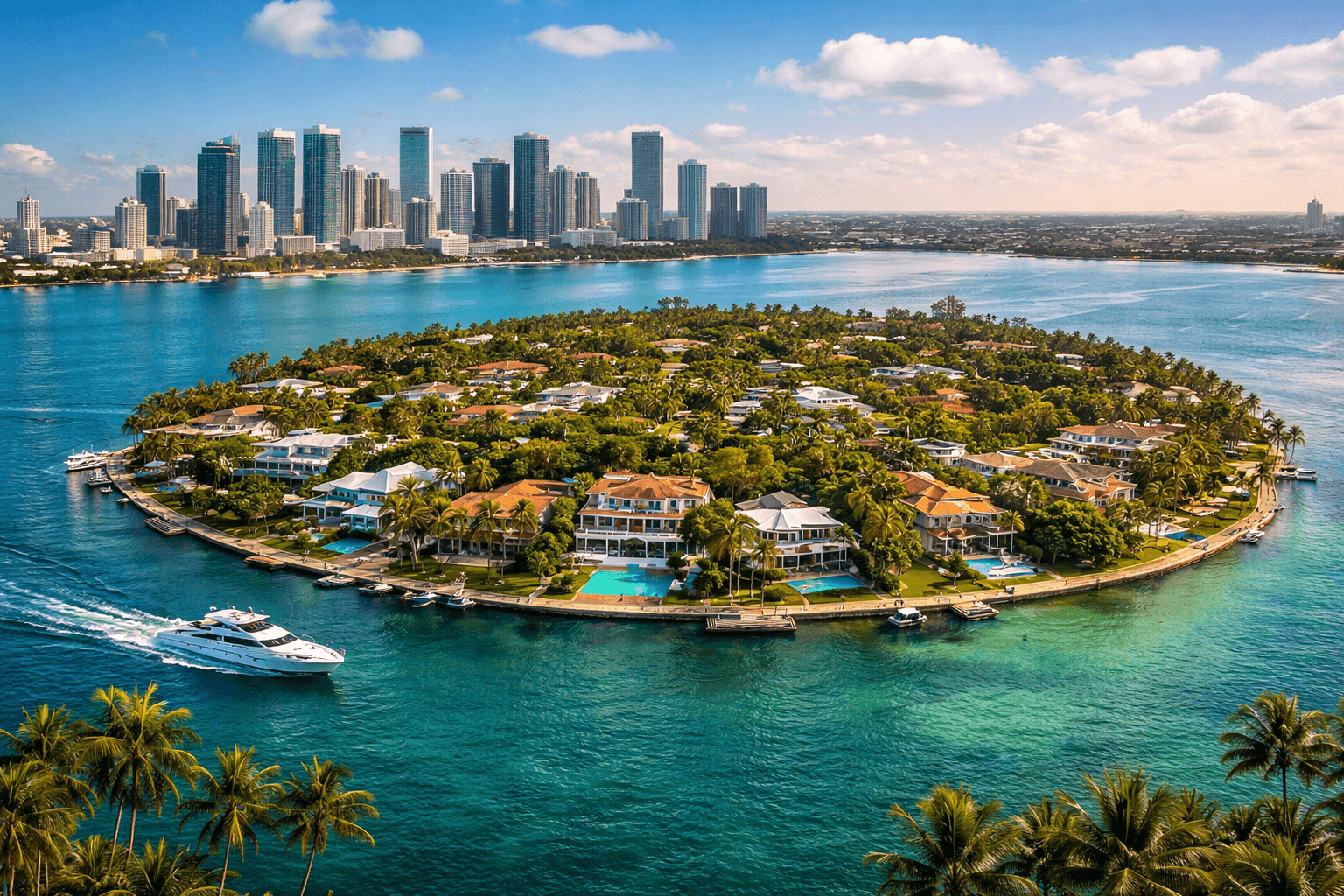
Indian Creek Island has earned the nickname Billionaire Bunker for a reason. It is one of the most exclusive residential enclaves in the country.
Jeff Bezos has made major property moves in the Miami area, including purchases tied to Indian Creek.
Mark Zuckerberg has also been linked to a record-setting purchase on the island, reinforcing its appeal to tech wealth.
Why Indian Creek attracts them:
- Extreme privacy and security
- Waterfront estates with private docks
- A curated neighbor set, consisting of ultra-high net worth individuals
- Close proximity to Miami's cultural and financial core without living in the middle of it
It offers insulation without isolation.
Coconut Grove in Miami
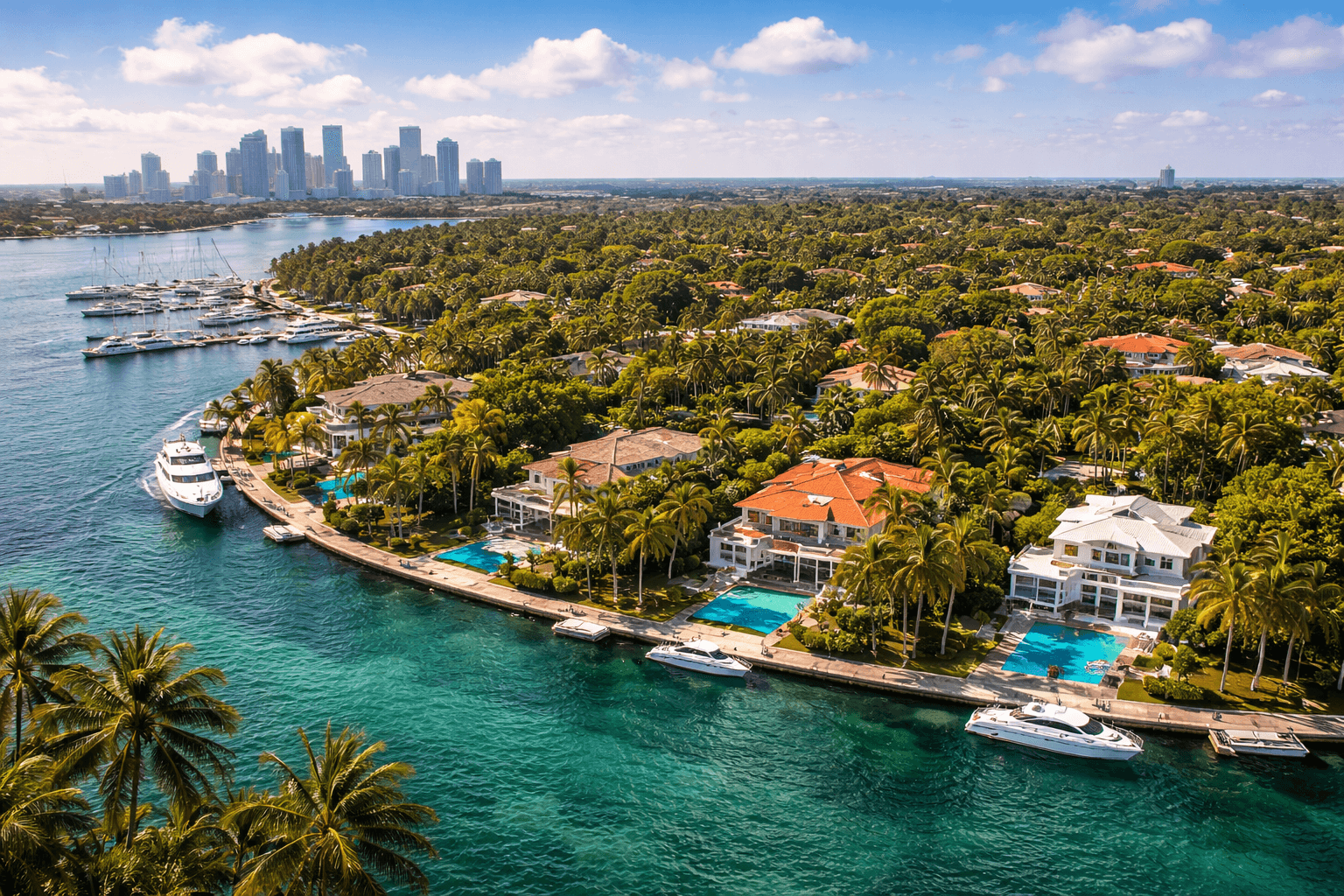
Larry Page has been widely reported as purchasing trophy properties in Coconut Grove. Coconut Grove offers a different kind of prestige comparable to Indian Creek. It is relatiely historic, lush, waterfront-oriented, and refined without feeling like a fortress.
Why Coconut Grove works:
- Mature tree-lined streets and established estates
- Access to marinas and Biscayne Bay
- Close to Brickell and Coral Gables
- A quieter residential atmosphere with serious property values
It feels both old money and new tech at the same time.
Miami Beach Enclaves Including Allison Island
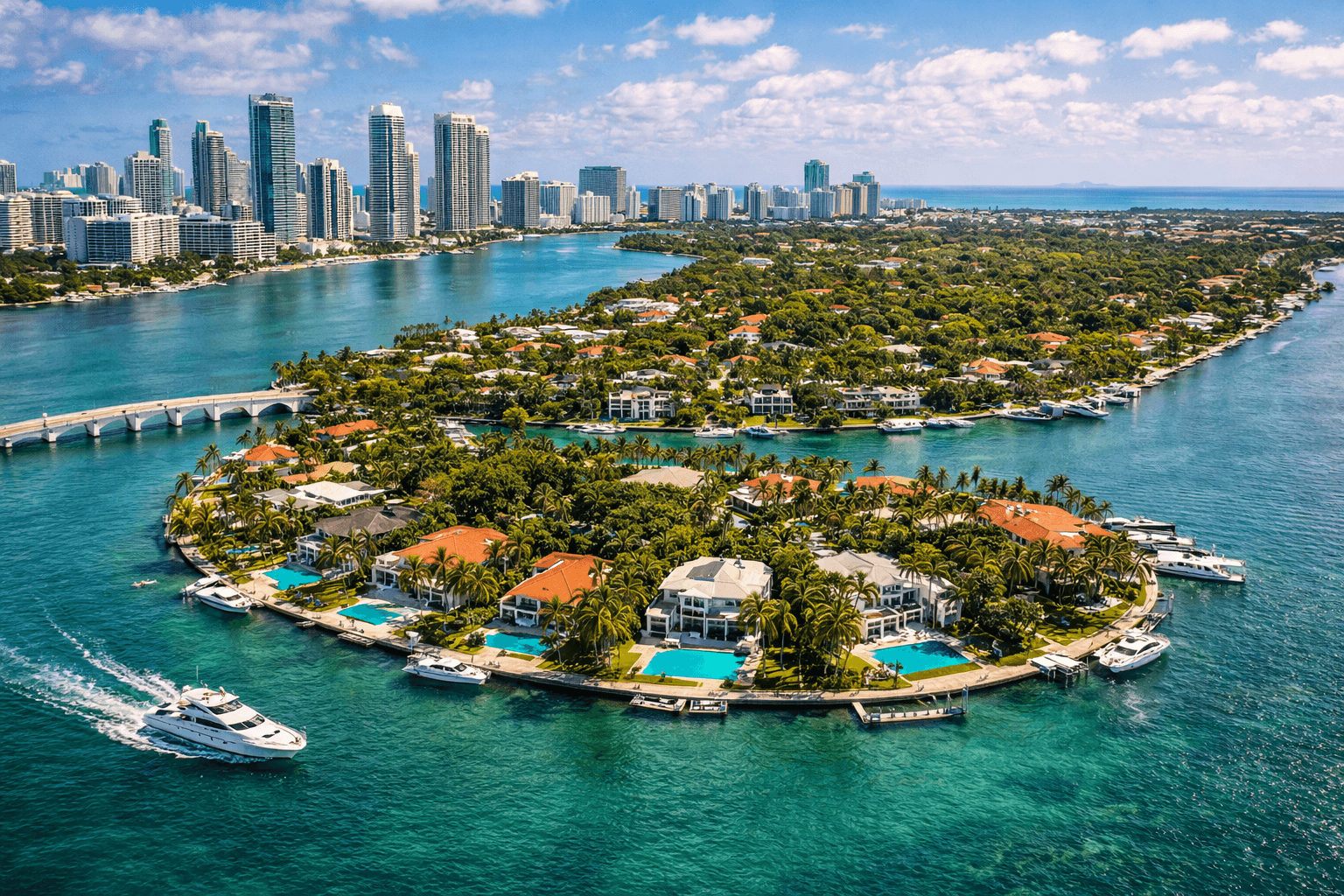
Select Miami Beach micro neighborhoods continue attracting global wealth.
Sergey Brin has reportedly explored significant purchases in the Miami Beach area, reflecting broader tech interest in South Florida.
These areas offer:
- Central waterfront access
- Immediate proximity to dining, culture, and events
- Smaller controlled residential communities
- A strong status signal
They combine visibility and privacy in a rare way.
Manalapan and Palm Beach County
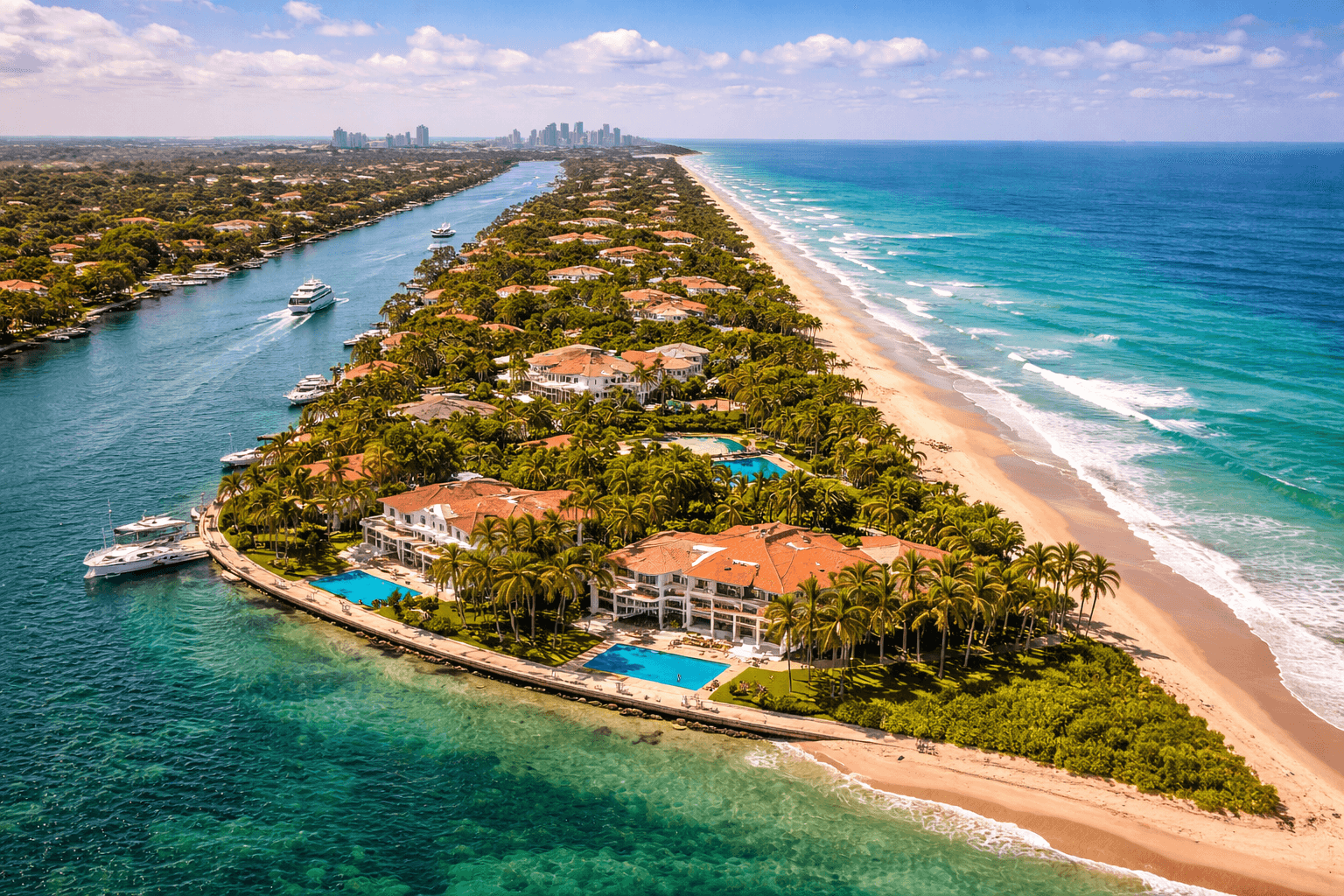
Larry Ellison has been associated with major real estate purchases in Manalapan near Palm Beach and has reportedly shifted primary residency to Florida.
Palm Beach County has long been an epicenter of generational wealth and financial influence.
Why Palm Beach County attracts billionaires:
- Established luxury infrastructure
- Private clubs and legacy estates
- A quieter, more understated culture of wealth
- Strong security and privacy
- A reputation built over decades
If Miami feels energetic and international, then Palm Beach feels more institutional and powerful (generational wealth).
Could South Florida Become the Next Silicon Valley?
It will not look like Silicon Valley. But it doesn't need to. The more relevant question is whether South Florida can become a major and durable tech and capital hub. All the neccessary ingredients seem to be forming.
Lifestyle magnetism
Miami offers global connectivity, strong cultural energy, and a climate that appeals to executives who no longer feel tied to a single physical headquarters, and in the digital age, this is more trend than fad. Corporate leadership moves first. New talent often follows.
Capital concentration
When firms and founders relocate, they bring family offices, advisors, investment teams, and operating companies with them. The corridor from Miami through Palm Beach County is increasingly home to high-level capital and influence.
A two-node system
Miami delivers energy, international connectivity, and startup density. Palm Beach County delivers privacy, legacy wealth, powerful connections and long-term capital stability. Together, that creates a pretty powerful ecosystem.
Is This Just a Temporary Trend?
Every migration wave faces skepticism. But this one has durable characteristics:
- Permanent residency shifts
- Long-term estate purchases
- Headquarters relocations
- Infrastructure investment
Those are not vacation decisions. They are strategic ones.
Final Take
The recent migration of billionaires to Florida is not just about sunshine or short-term tax savings. It is about strategic positioning, lifestyle alignment, as well as a clustering of capital and influence in a state that has become increasingly attractive to global wealth.
And if the momentum continues, South Florida may not replace Silicon Valley. But it could absolutely become one of the most powerful parallel hubs in the country.
Explore More
- Visit MyStateMLS - the nationwide MLS built for multi-state agents and brokers.
- Explore the MyStateMLS Blog - market insights and strategies for growth-focused agents.
- Check out our Industry Insights Blog - fresh articles on nationwide real estate trends.
What to Read Next